Monday, 25 May 2015

'Mad Max: Fury Road' Review (2015)

It seems as though there's always some form of impending doom on earth. The sea levels will rise, we'll run out of water, the dead may rise again. Whatever news you follow, you can always find something to be extremely paranoid about. Something out there that will bring about the end of this thing we call life on earth. Thing is though, this has always been the case. There's always been some prophecy of impending doom. In my lifetime, short as it's been, there's been at least 3 instances in which the world was supposed to end. I'm so desensitized to it at this point, that last time I made a sign saying "THE END IS NIGH" a la Watchmen. But as art tends to draw from life, it's not really surprising that there are countless fictional universes which deal with the end of the world.

Sometimes it's an uprising of cyborgs, of apes, or just the oppressed majority of society. Sometimes it's the collapse of infrastructure and the massive lack of resources. Sometimes it's a case of blowing it all up. Whatever the cause usually is, the best of these stories are those that have the most to say about the people living in this new post-apocalyptic world. We generally don't care to see the world ending, we're much more fascinated by what happens after that. We're not sure what exactly would happen, but fiction seems to content with showing us as depraved, selfish, darwinistic savages that resort to the basic desires of survival. Basically, we won't be singing kumbaya around a fireplace, unless the day's hunt is above said fire.

The couple on the right is plotting to eat the couple on the left.

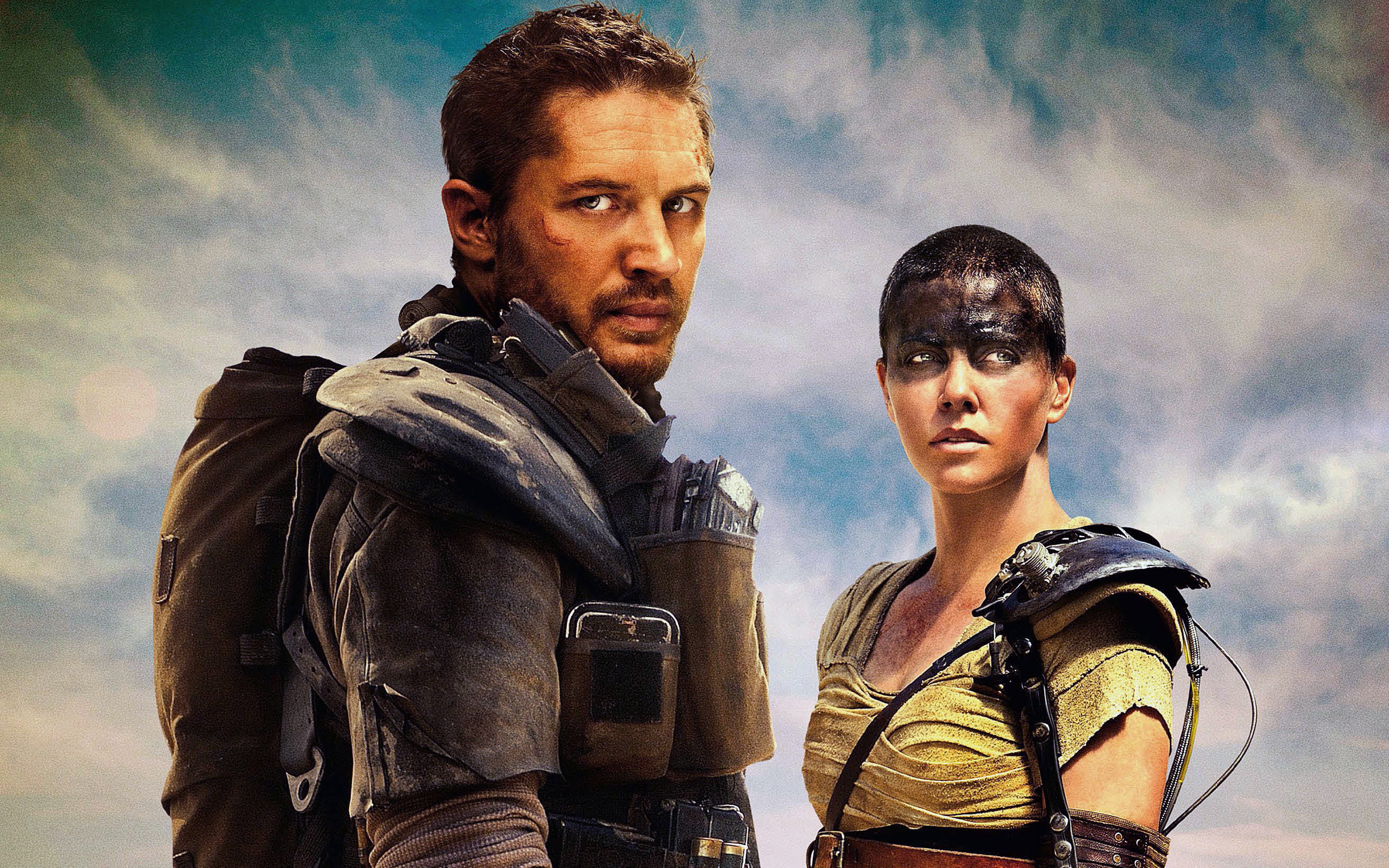
Set in an undisclosed time after a nuclear war left the world to dust, Mad Max: Fury Road is a story about the titular character Max Rockatansky and his struggle to survive in a world gone mad. This struggle, it seems, is not going so well, as the film opens up with Max being kidnapped by a group of the desert army the War Boys. Max is designated as a universal blood donor, but seeing as society has collapsed, instead of donating his blood to be stored for later use, Max is shackled and directly plugged into the arm of Nux, a sickly War Boy, played by Nicholas 'Beast' Hoult. As this all occurs, leader of the War Boys, Immorten Joe, decrees that Imperator Furiosa must go forth into the wasteland to bring back guzzoline, a precious commodity in this world. Little does Joe know, that Furiosa has taken it upon herself to kidnap his pregnant prisoners 'The Brides' who all carry Joe's offspring. Once he realises this, Joe leads an all out assault to recover his stolen property, which Nux refuses to miss out on. Nux decides to strap his blood bag, human being Max, onto the front of his car and join the chase, on the Fury Road.

If you think all of that is too much to take at face value, and requires more information, then don't see Fury Road. It will do nothing but frustrate you. I for one, have sat through countless films that feel the need to tell and tell and tell, over explaining to the point where it almost insults the audience's intelligence. They even go so far as to create a character that doesn't have a clue, just as an excuse to bog down the movie with exposition in a way that doesn't break the continuity. Mad Max thankfully bucks this trend and basically chews you up and spits you out into this world and hopes you pay attention. It doesn't make any attempt to explain itself, it just expects you to be able to keep up. With that method employed, Mad Max has some of the best world building I've ever seen in a film. By not taking you out of the movie to explain the world your movie is in, Mad Max does the simplisticly brilliant thing of just leaving you in that world. You pick up everything you need as it goes along, just by watching the characters inhabit their environment. This is emphasized only by the movie's improbable attention to detail. The amount of work put into the environments, the vehicles, weaponry and even the costumes is phenomenal. There are so many little pieces that serve as rewards to the viewer with an astute eye.

The movie also feels real because most of it actually is. Director George Miller has gone on record in saying that over 80% of the effects in the film are a result of stunts, set construction and make up, with CGI used sparingly. That sounds difficult, but not impossible. It however does seem impossible when you see just what Miller has been able to accomplish. The choreography of the stunts is simply staggering and this film will certainly be one that is studied for it's contributions to cinema for years to come, which is mind boggling. Any film that comes out between the months of May and August aren't supposed to be studied by anyone. Those films are supposed to sell tickets at exorbitant prices and provide flashing lights to eat your popcorn at. Sure everyone likes seeing Vin Deisel use a giant safe as his own person car hammer, but it's hardly deserves deep thought.
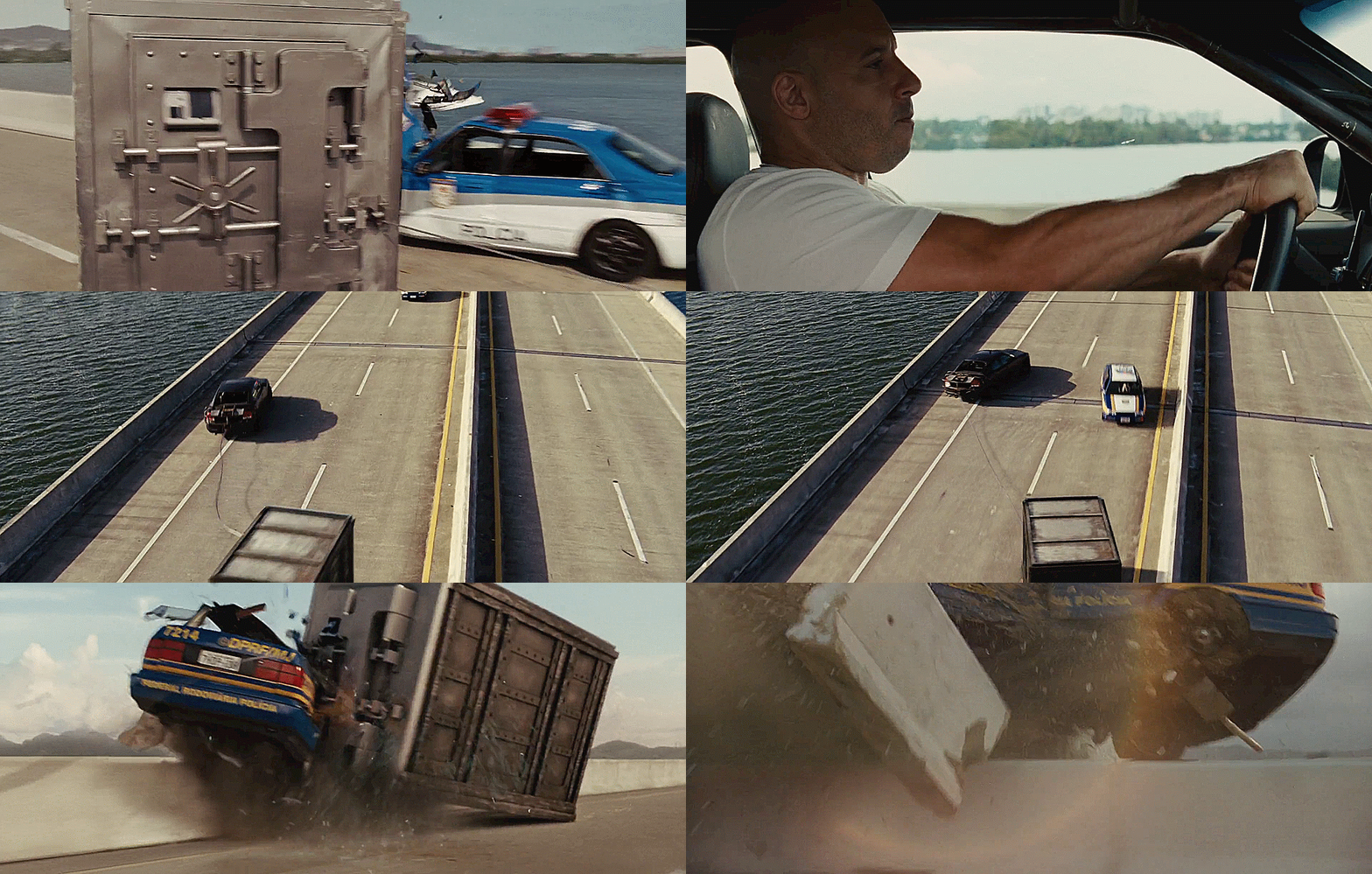
*rubs forehead*

Outside of the world itself Mad Max has a pretty simple story. The film is essentially one big car chase with 80 different cars. Max himself doesn't have too big of a role in the film as he's more of a drifter in this plot, someone who's been thrust into someone else's plight, just trying to survive. Truly, the hero in the film is Charlize Theron's Furiosa. The world building I spoke of earlier is furthered in the performances. Everyone makes you feel as though they've been in this world for a long time and have become the creatures they are today to survive. Nicholas Hoult gives the most psychotic performance which is fitting as Nux someone who was born into this world of sand, oil and bullets. Max is stoic and reserved, but has moments where he breaks, as a man who tries to cling on to the saner days of the past. Furiosa however is probably the most nuanced in that her character is sufficiently psychotic, but her hope gives her a focus that makes her seem not so much psychotic, but at least maintaining a controlled insanity.

Mad and madder.

The only time action movies reach this caliber of excellence is when they're made outside of the US. Films like Snowpiercer and The Raid come to mind. even then, those films don't portray the sense of scale that Fury Road does. This film has long sweeping shots with an army of vehicles that only grows and grows. It never lets you forget that you're in a huge sweeping wasteland that seems to never end. Aside from that, even though the film is in such a wasteland, it never seems bleak. The colours are vibrant and the world, as dead as it is, feels alive. The road itself exudes a raw emotion that reflects the severe insanity of humanity's last survivors. The film is simply a technical marvel and a damn entertaining one at that.

A.N.R = 10/10

Thanks for reading and if you have any questions or comments you can leave one below. This film ended up topping my best of the year and you can actually listen to my podcast on the best of 2015 right here:

Sunday, 3 May 2015

'Marvel's The Avengers: Age of Ultron' Review (2015)

So in the months leading up to the release of 'Avengers: Age of Ultron' the anticipation for the sequel was far less skeptical than the original. How could a movie that purported to balance six different characters from films that, while in the superhero genre, were said to have come from drastically different worlds, actually work? Could the world of "science so advanced its magic" of Thor work with the advanced, yet grounded sci-fi of Iron Man? Many thought that characters would be short changed as a result of sharing the silver screen, ultimately doing a disservice to the universe that they were trying to advance. The real question is, why in the world would any of that be a concern?

Picture, if you will:
  • A man who wears a robot suit that flies around the world shooting lasers out of his arms
  • The world's first superhuman who carries an indestructible shield that works almost like a boomerang. 
  • The literal Norse God of thunder hammer and all
  • A Hulk.
That is not a combination of things that you should worry about putting into your film. That is the kind of combination that is the formula for printing legal tender.


Pictured: Tuesday at Marvel Studios

As the conversation leading up to the sequel wasn't "Will it make any money?", but rather, "It will probably make ALL the money.", it's safe to say that formula worked. But really, there's no reason to think it wouldn't. Comics and television shows have always crafted giant crossovers of this nature. To this day, it still occurs, and it always brings a bigger audience. Now whether or not it's a good artistic decision is a different argument entirely, but since 'The Avengers' sits comfortably at 92% on Rotten Tomatoes, it’s also safe to say it worked critically just as it did commercially.

The issue of juggling an ensemble cast I suppose could have been a concern, but then again not really. The X-Men films had been doing it successfully for years on the superhero front, and even films like Silverado, which is essentially 'The Avengers' but a western. Both those films worked best because there was a director who could manage an ensemble cast, and Joss Whedon also belonged in that company. To say that an Avengers film wasn't going to work is to misunderstand and discredit audiences of popular cinema.
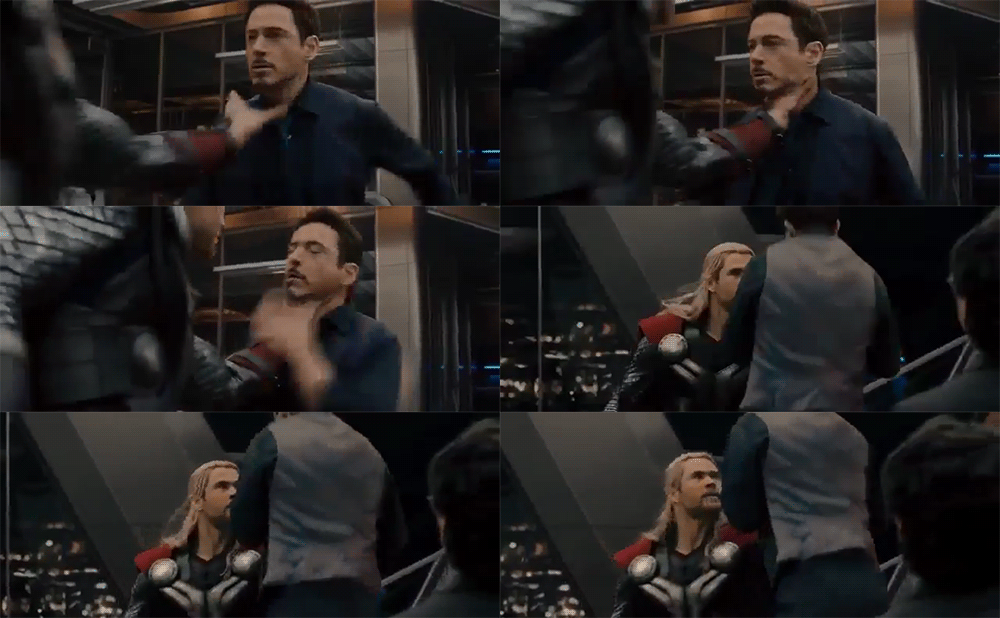
This is exactly what the people want to see.

The real question is, can you do it twice?  'Avengers: Age of Ultron' is not just a sequel to it's predecessor, but the eleventh iteration in an ongoing franchise, with a universe that gets more complex as the years go by. There was always going to be a difficulty finding a focus. Age of Ultron immediately shuts up any doubts you might've had prior to the curtain being drawn. The crowning moment in the original is seeing the titular team actually assemble. Age of Ultron recognizes this and opens with a tracking shot that very much is similar to the one shown near the end of 'The Avengers'. The team is as you left them, working in tandem, and quipping at each other left and right. You get a sense that a great deal of bonding has occurred. The heroes work together this time around instead of being at each other’s throats.

Well sort of. 

This is essentially what the movie deals with. The Avengers now exist. The rumours of giant rage monsters and hammer warriors have become reality. Of course, such a monumental change would have at least, a modicum of effect on the world at large. It's not a new route for a sequel to take. Batman Begins described it best with Jim Gordon's speech about escalation. The Avengers have escalated the world of crime prevention so naturally, the criminal element would respond in the only way they know how. This introduces us to our newest superpowered element, the Maximoff twins. As a result of evil experiments using tools of an otherworldly origin, regular old Pietro and Wanda Maximoff have been transformed into the "enhanced" Quicksilver and Scarlet Witch. As the film eloquently puts it "He's fast and she's weird.” That weirdness however, is the driving force for the film's plot. Working in the shadows she treats Tony Stark to a vision of impending doom. Being the type of guy Tony is, he takes this to be completely literal, and here one of our heroes is burdened with the urge to stop the fight before it even starts.


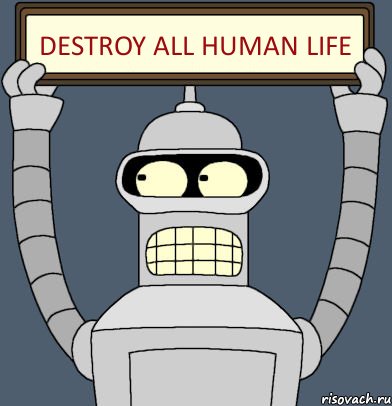
It’s this that drives Tony to kick-start the Ultron program, an artificial intelligence program capable of “peace in our time”. Of course, Tony, having invented robo-butler Jarvis and having never seen Terminator, I Robot, War Games, 2001, Wall-E, The Matrix, Tron, or even Transcendence, he decides to go ahead with it anyway. Of course, Captain America has definitely seen War Games so in order to make sure he doesn’t stop him, he tells only fellow Science Bro, Bruce Banner. Eventually it goes right and Ultron is born, and immediately, as a robot, decides humanity is it’s own worst enemy and the only way to establish peace is to end it because OF COURSE HE DOES.

I don't want to say it's their thing, but it's kind of their thing.

While Age of Ultron may not provide anything new to the artificial intelligence genre, the character himself is like something I can’t say I’ve seen before. Voiced by the ever so devious James Spader, Ultron is more charismatic than I anticipated he would be. The character is supposed to reflect the personality of his creator, the snarkiest of Avengers, which accounts for his charm and smarm. Spader brings a realm of nuance to the character that makes his speeches about world domination not as cheesy as the script might suggest. He’s fiendishly clever and extremely likable. The performance only furthers the character’s credibility, simply because, although he is a robot, he is still extremely human. 

The wonder twins I mentioned earlier are quick to aid Ultron in his plight. Interestingly, the characters don’t suffer from being new additions to a film already jam packed with super people. Being orphans as most in their profession are, their origin is refreshingly glossed over. Having lost their parents to bombings making use of Stark Industries weaponry, the Maximoff twins swore vengeance against the former arms dealer and his band of superfriends. It’s a story beat that benefits from this already existing universe. It would be logical to assume that the illegal weapon smuggling established in the first Iron Man would have some adverse effects down the line. Aside from that, the characters themselves are very much well defined. Scarlet Witch gives off a creepy vibe and Quicksilver is impatient and feisty. What makes them work is their innate connection with each other which is more than brought forward in the performances by Taylor-Johnson and Olsen. Of course this doesn't negate the fact that just last year I saw these two have a different innate connection, but that’s Hollywood.

Twincest to make George R.R Martin blush

Of course since 9 characters isn’t enough, Paul Bettany also joins the cast as the Vision, the movies other caped crusader. Bettany’s voice is nothing new to the franchise, having played the aforementioned robo-butler (robutler?) but this performance is slightly more involved. Much like Ultron, Vision is an artificial intelligence, although rather than deem the world ripe for extermination, he is far more forgiving. I don’t know if this is because this character was introduced in the last 30 minutes, or if Spader was just so convincing, but I found this character to be a bit lacking. He seemed to be far too removed from any sense of actual humanity to have any real connection to it. While he’s part of a few of the movies more memorable moments, I still wish there had been more to chew on with this role.

Is it bad that I preferred the murderous left to the righteous right?

The main cast might be making jokes and kicking ass, but they’re far from just vehicles for action and comedy. They each have bits of their stories that get advanced ever so slightly through their characters. The Hulk and Hawkeye are the most notably developed out of the main cast, having been absent since the last Avengers film. Jeremy Renner’s performance in this is particularly noteworthy, which is probably because it’s the first time we get to see him be his character. There’s a romance between Bruce Banner and Black Widow that might seem sudden, but it’s nonetheless believable. It's a sweet subplot that might also seem out of place but provides a sense drama to the film as it begs the question of how sustainable is this whole arrangement, and how soon is it before it all falls a part. Can you be an Avenger yet still seek to have the coveted normal life? Many superhero films have tried this to the point where it's a recognized trope, but again, due to the universe these characters inhabit, it made sense to me that you'd ponder such things after all this time.


Amazingly, the film strikes a balance between humour and tension and fares more along the side of Captain America: The Winter Soldier, than Thor: The Dark World, in terms of overall tone. The story itself plays out well enough. You never really believe that Ultron will win and it does play out somewhat similar to the first one. As the first one had the Avengers split apart only to come together to fight against a hoard of evil minions controlled by the big bad, so does this one. The set pieces are still absolutely fantastic, taking advantage of the fact that the Avengers are now a globe trotting force and are truly Earth’s mightiest heroes. What’s even better about this film is that it doesn't feel as though action is put in because there needs to be an action scene at that point in time. There always feels like there is a reason for a fight, and not just ticket sales. Furthermore, the movie directly acknowledges a troubling trend in superhero films which is Superhuman Reckless Endangerment. Rather than throwing their enemies into buildings with abandon, the Avengers make painstaking efforts to control the collateral damage, something that was present in the first film. There are still innocent lives lost but there’s an effort to keep that number as low as possible. There’s a particular scene following the fight between the Hulk and Iron Man in which the film takes a step back, letting you know that these heroes feel the weight of those losses.

Man of Raw Deal
  
I once heard C. Robert Cargill say how a film is great based on the moments that stick with you. To Age of Ultron’s credit, I have a hard time picking which moment I liked the best. I could say it was one of the glee inducing bombastic action sequences, I could say it was seeing superheroes actually save people, I could say it was seeing The Avengers eating Chinese food and trying to lift Thor’s hammer. The point is, there’s always going to be something. Avengers Age of Ultron is an action movie but it’s also a classic “Man vs Self” story, emphasizing that our biggest obstacles come from within. It’s extremely comedic but it always takes time to acknowledge the drama. There’s a romance in there but there’s also a 3 way bromance. Avengers: Age of Ultron isn’t a perfect film. Like the Star Wars films before it, Avengers films are the sort of big event filmmaking that the cinema is for, that simply shouldn’t be left to be caught one day on cable or when bored browsing through Netflix. Not too many movies deserve to be seen on the big screen these days, not even in the summer, but Avengers: Age of Ultron definitely does. 

A.N.R = 9.0/10

Be sure to listen to my weekly film discussion podcast Take 4, here's our episode on artificial intelligence like Ultron himself:


Sunday, 1 March 2015

'Kingsman: The Secret Service' (2015) Review

My first Bond movie was 'Casino Royale'. I had heard of the legend of James Bond and the spy genre was one that I was familiar with even though I'd never seen a spy movie myself. Films like the Incredibles, the Austin Powers franchise and countless cartoons had made the spy cliches and tropes readily apparent to me. The outlandish villains, the ridiculous gadgets, and a film score that would be one moment, a subtle bassline and then the next an exploding trumpet. All of these references I had come to know, but I'd never actually seen the source material. It seemed intimidating to get into a franchise with 20 previous iterations and nearly 50 years of history, especially to a young movie buff of 10. So there, watching 'Casino Royale', my first spy movie, I was ecstatic.

To be honest, the movie was wonderful, but my young self couldn't help but feel cheated. The music was serviceable, but not particularly thrilling. The villain was calculated but hardly larger than life. The gadgets were practical but not exactly interesting. All of the things I had been trained to look out for were nowhere to be found. I'm not saying I didn't like what I got, it just wasn't what I sought out. The opening chase scene of 'Casino Royale' is a technical marvel and one of the best action scenes of the last decade, and a steely eyed James Bond is just as entertaining as a smirking one, but when you're looking for the series known for an invisible car, a tracking device arm implant just isn't going to cut it. The spy genre is now, one of fiction, rather than fantasy.

Seriously

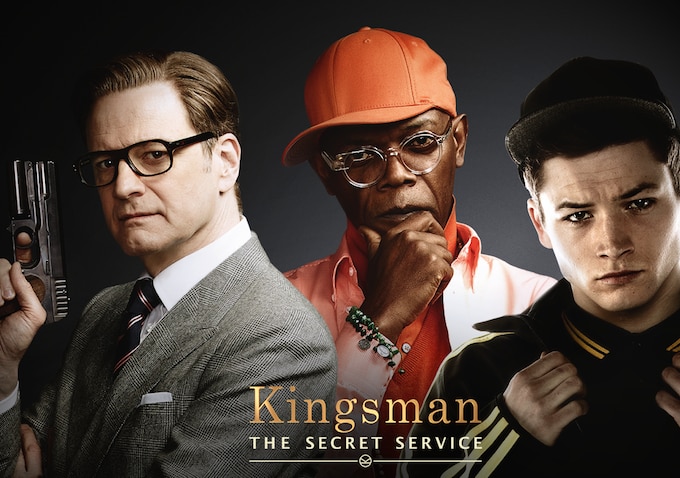
'Kingsman: The Secret Service' notices the recent development of spy films and harkens back to the days of Connery and Moore. Set in the present day, but seemingly on a 60s backdrop, 'Kingsman' follows the life of one Gary Unwin, known as Eggsy. Eggsy is a typical ne'er do well. Dressed constantly in a hoodie and a cap tilted sideways. Living with his mother, step-dad and baby sister, Eggsy constantly fights his inner angst, sometimes by getting into actual fights. After his latest brush with the local law enforcement, he recalls a message left by a former associate of his deceased father's, anytime he should need help. Eggsy, seeing no way out this time, relays the message through the proper channels and who should appear but Colin Firth! Mr. Andrews himself, playing Harry Hart, premier agent of the last line of defense against the evil and the maniacal. As Eggsy and Harry meet properly, the two discuss why Eggsy finds himself in these situations and suggests that he would be better off doing something else with his youth. Eggsy, having no clue what else he's to do with his life, and having seen King George VI kick enormous amounts of ass, readily accepts the offer to join the titular organisation Kingsman: The Secret Service. A spy organisation that operates with no affiliation to any government and no agenda except peace and prosperity. 

What follows is Eggsy's journey from becoming a street rat hoodlum to a gentleman spy, akin to 'Trading Places', 'My Fair Lady' and 'Pretty Woman', movies which the film itself references. Said journey is made with the type of film director Matthew Vaughn has become known for. There's lots of blood and gore, and the violence is almost another character in the film. It's very over the top and never tries to convince you that it's supposed to be gritty and realistic, as many films in this genre have become. In fact, 'Kingsman' seems to be the perfect fit for Vaughn, having directed both 'Kick Ass' and 'X-Men: First Class'. 'Kick Ass' had the brutal action and foul language, and the quick witted dialogue, but was held back by having to sell a realistic story in an obviously hyper stylized world. 'X-Men First Class' has an entire sequence in which Erik Lensherr goes from country to country in a black turtleneck and silenced handgun, that seemed more like test footage for a new Bond film rather than a superhero movie. Not to mention 'Kingsman' and 'First Class' both feature stories that involve extended training of a group of young kids all whilst preparing to fight a world destroying villain. 'Kingsman' gives Vaughn free reign to tell the type of in your face action story that he seems to have always wanted to tell.

When you have Colin Firth as a bad ass and Sam Jackson as a villain, you know you've made it as a director

However, this might be 'Kingsman's biggest problem. If you don't reserve your predilections and find it difficult to buy into a film where a woman walks around on metal stilts that she can cut a man perfectly in half with, then this movie isn't for you and you probably won't enjoy it. For myself, 'Kingsman' had such a feeling of genuine glee and silliness that I found it easy to discount the minor gripes I had with it. Yes some of the jokes are a tad bit too juvenile, but the film isn't trying to sell you on anything high brow in the slightest. In fact, the film itself touches on the dichotomy of audiences in its story. The whole point of Colin Firth appointing Eggsy as a candidate for Kingsman is that he wants the organisation to better represent members of a lower class. The leader of Kingsman, Arthur, played by Michael Caine, thinks to attempt to transfom Eggsy is a waste of time, to which Harry replies, with respect, "You're a snob". That perfectly encapsulates the film in a nutshell. There's nothing wrong with this brand of humour or cartoonish storytelling, and anyone who thinks so might just be taking themselves too seriously.

'Kingsman' follows this vein of the rich vs the poor in its story as well. Not to give away too much but, simply put, the main villain, Valentine, played by Sam Jackson, has a plan that affects the world at large, benefiting a few, but forsaking the many. While there's nothing wrong with the main conflict, it's secondhand to the action scenes. I mentioned how the violence is almost a character in the film, and that's because so much attention is given to it. Everytime there's a fight scene the movie it's as if the movie itself is getting into a fight. It stops, takes off it's earrings and gets ready to throw down. The way the scenes are shot solves an issue with how action is generally shot. The fights are either boring or too incomprehensible. In 'Kingsman', the fights have a dynamic structure to them, constantly building until its end, and adding in new forms of violence. With each one of these moves, the camera follows the final blow making each one have its own substantial impact. This is enough to keep the viewer entertained and it also never feels as if there's no reason for it, which would be completely fine considering how impressively these scenes are filmed.

As far as the performances go, young bloods Taron Egerton and Sophie Cookson hold their own among big wigs like Caine, Jackson, Firth and Strong. Especially Jackson, who clearly seems to be having a blast as the villain. Valentine as a character has an aversion to violence but has no issue ordering the slaughter of countless people and isn't the malicious type of villain. There's no scene where he gets to chew the scenery in a rage, and at most will seem like a kid who just got his favourite toy taken away. He has a childish quality that, when juxtaposed with his character, leads to plenty of funny scenes. I'm also pretty sure he said Motherfuck a few times, but that's probably a given at this point. At the heart of the whole film however, is the relationship between Eggsy and Harry. The two share a bond that drives both their motivations. Harry is like the uncle who's like a father to Eggsy seeing as his real dad is out of the picture.

Pictured above: 'Bond'ing.

As fantastical and as silly as 'Kingsman' is, it has a surprising amount of heart. When they aren't using umbrella's as deadly weapons or having a serious dinner over McDonald's, the film tries to say something about the merit that every man, woman and child has, and that because of that merit, they are owed the same respect as a lord or a king. The beauty of 'Kingsman' is that those two opposing tones never seem to clash. The humour never discounts the heartfelt moments and the heartfelt moments never seem out of place. The script is filled with biting humour, but never too snarky, and while you might roll your eyes at just how ridiculous it is, it pulls it back just a tad so that it's not too much. The characters are well defined, the action is superb, and the movie makes you want to see it again, if not just for the action scenes themselves. In a world where the spy genre is saturated by Bourne, Bond and Bauer, 'Kingsman: The Secret Service', is a welcome addition.

A.N.R = 8.9/10

Thursday, 22 January 2015

'The Wedding Ringer' (2015) Review

Romantic comedies are probably one of the most laughed at genres of film out there. The high brow critics will tell you time and time again of their many tropes. Their characters are shallow, their stories are unbelievable and more than anything else, everyone in the theatre is left thinking no one on earth would act like that. I've wanted to scream at a character in a rom-com more so than any in a horror movie. How many times do characters have to overhear conversations out of context, and then for the sake of the plot, refuse to hear any explanation that would provide said context, before audiences say enough is enough?

But the thing is, audiences don't think it's enough. Romantic comedies have been around forever, and the genre is not an inherently bad one. from 'Some Like it Hot' to 'Love Actually', you can always find a good number of gems in the ilk. But even the worst ones get a lot of play, and the clichés that are trotted out time and time again are no more offensive that the ones in your cheesy action flick. In fact, comparably it's even less offensive because as frustrating as the characters might be, their predicaments are at least plausible. It's the plausibility of these stories that makes them so frustration to watch, because it seems like such an easy thing to pull off. All you have to do is craft a good love story between two people, but instead, many opt to go the fairy tale route with caricatures instead of characters and lose their grip on the movie. I suspect however, that just as one turns their brain off to watch Optimus Prime pummel a Ninja Turtle, so too does the rom-com viewer with the latest storybook love story. Yeah, you probably rolls their eyes when romantic comedies come out, but there's always going to be a group out there who adores it. To them, Katherine Heigl and Jennifer Lopez are their heroes, not Jason Statham and Gerard Butler.


Although there may be some overlap there...

'The Wedding Ringer' is the latest rom com to grace the silver screen and it comes with a premise as preposterous as ever. Josh Gad plays Doug. A young, successful, soon to be groom who is about to marry his much hotter fiancée Kaley Cuoco-Sweeting. They're young, in love and nothing could be better, except there's just one problem. Doug is a bit of a loner with neither a best man or a grooms-man in sight. Enter, the Wedding Ringer, Jimmy Callahan, played by Kevin Hart. Jimmy provides a service where he pretends to be the best man to the friendless fiancée. He does this by learning everything he can about his client, fabricating old adventures between the two and providing enough charisma for people to overlook the glaring impossibility of the premise. 

'I Love You Man' + 'Hitch' = 'The Wedding Ringer'

So Doug goes to hire Jimmy to be his best man after his wedding planner notices his side of the Church is noticeably empty. Doug explains that not only does he not have a best man but he has zero grooms-men, which is an undertaking Jimmy has never done before called the "Golden Tux". Jimmy must now put together 7 fake grooms-men to fool Doug's wife and voila, we now have an ensemble comedy. From here we watch a montage or two of Jimmy getting his guys together, his guys learning their characters, and finally trying to fool the family. These are humorous mainly because the original cast is composed of what seems to be, a harlem globetrotter, Hurley from Lost, two potential sex offenders, Joe Dirt in a wheelchair, Fat Albert's disappointed father and a grown up Charlie Brown if Charlie Brown was an actual child star and ruined his life with drugs and alcohol.

I'll let you decide who's who

I've always held that if a film has a ridiculous notion, it doesn't matter how ridiculous it is, as long as it is sold well to the audience. 'The Wedding Ringer' does this by showing Jimmy's numerous clients in the past as well as showing us him on the job itself. However, for some, it may be too much to swallow that the friends and associates of his many clients all suddenly believe that this man whom they have never met is actually the secret life long friend of the groom. As absurd as it might be the movie is actually quite entertaining if you go along with it's absurdity. 

There's a thing in comedy, which is called the "hat on hat" premise, which basically describes having one funny idea and then compounding it with another funny idea, until it becomes indigestible and it no longer resonates with the audience. With that in mind, 'The Wedding Ringer' could be accused of buying out the hat shop as a good chunk of their jokes are predicated on constant build up that doesn't always amount to any pay off. The premise itself is an example of this as we basically watch as this original lie gets bigger and bigger and essentially we're just waiting for it to fail. This is not a new type of comedy as it's been done time and time again on at least 8 episodes of your favourite sitcom.

Yes, even this one. (Foosball and Nocturnal Vigilantism)

Where the movie trots out the old it also actually has some interesting ways in which it surprises you. There are moments where the movie is making a commentary on the genre itself. Jimmy's business basically represents the romantic comedy industry. He lies in order to make the wedding go perfectly, even though it's all fake. Jimmy fulfils the desire for people to see love as they want it to be, just as rom coms give us false notions of love and human relationships. Aside from that, some of the aforementioned genre tropes are actually turned on their heads in this film. Films like 'Friends With Benefits' attempt to present us with a "different kind of comedy" but ultimately become what they were trying to mock. 'The Wedding Ringer' surprisingly kept it's integrity and stuck the landing in what it was trying to achieve.

To praise the movie more, aside from those awkward jokes that don't go anywhere, the movie is actually pretty funny. I laughed more often than I didn't and that's mostly because the cast works so well together. With the exception of Kaley Cuoco-Sweeting's character, the chemistry between the actors is stark which is why it's absurd premise and grandiose set pieces are so easy to swallow. Gad and Hart are definitely at the heart of the film and carry it for the most part. Their performances are so good at investing you in their characters, that even in scenes that don't involve them, you're picturing their reactions and laughing at their response. 

'The Wedding Ringer' is by no means the next raunchy comedy success story. It's January release almost makes sure of that. What it is, is a movie with more heart than it needed and enough entertainment value to give it the sway over whatever else is on tv at the time. It's not something you desperately rush out to the theatre to see but it's definitely not a waste of your time. I'm glad I got to see it, as a few of the scenes are still stuck in my head a week later. As a film goer, I never like going into a film with negative expectations. As hard as it may be to do, I try to go in with a completely blank slate so that I'm not let down or so that my preconceived notions of the movie don't tarnish the art. Admittedly, I didn't go in expecting much from 'The Wedding Ringer' which is probably why I liked it so much. It surprised me and made me laugh when I expected to be checking my watch the whole time. So with that in mind, it may have been just a decent film but as it stands now, I had a good time.

A.N.R = 7.7

Sunday, 4 January 2015

'The Hobbit: The Battle of the Five Armies' Review (2014)


Prequels have enjoyed a resurgence in the last few years. While the more cynical movie viewer will see the movement as a bid to forever milk a franchise dry and then milk it some more, others will see it as a chance to return to the worlds that once captivated them. Regardless of your impressions going in however, what matters is how well the job is done. Prequels however, are notoriously hard to do. Just imagine trying to develop tension for characters that the audience knows are going to survive, or having the crux of the plot be a world ending device in a world that we know remains unended. Not to mention the added pressure of having to connect your film to the original one. As difficult as it may be, it's not impossible to do it, and do it quite well.

Recent forays into the prequel territory are films such as X-Men: First Class and Rise of the Planet of the Apes. Both were critical and commercial successes that garnered sequels that came out this very year. These films seemed to have, in a sense, cracked the prequel code. They embrace the fact that audiences are more than familiar with their franchises, even going so far as placing the ultimate destination in the very title. The emphasis of these films rests with the characters and their development, which in a certain sense, is the obvious place to go. The difficulty of building a world for the audience to understand is non existent as they're already well versed in it. We already know where mutants came from, what we don't know is how the X-Men became the X-men and how these characters came to be the larger than life characters we've come to enjoy. The apes were always going to seize the planet, the story comes from how such a feat is accomplished. All of this however is moot without a character to develop these stories through. The Apes film would not have been so enjoyable without the melancholy abrupt maturity of Caesar nor would First Class be worth a damn if not for the rise and fall of Erik and Charles' bromance.


The sexual tension between these two was ca-ra-zy

Which leads us to the third and final film in the Hobbit franchise, prequel to the block busting, academy award winning Lord of the Rings franchise. Cinema cynics will of course take um-bridge with the films very existence, though it's not hard to see why. Aside from being a prequel, the book on which it's based on is merely 300 pages, and was decided to be split into 3 films while production was being done on the 2nd. Add that to the fact that a portion of the story in the films was garnered from the appendices of a different book entirely. Certain characters that exist in the films were not even mentioned in the source material, so it doesn't take a degree in film studies to say that there might have been a slight advantage to the commercial over the creative in the production of this film.
Of course, all of this is speculation, conjecture and largely irrelevant when judging the film as it stands.

Starting off where the last film ended, the movie begins with...an ending. As the Desolation of Smaug ended with the terrible dragon headed to destroy the people of Lake Town, Battle of the Five Armies shows such destruction. As someone who thinks you can never have enough dragons in cinema, I personally thought this scene was perfect. Smaug remains a technical marvel and while his lines are few, Benedict Cumberbatch's performance still resonates as frightening. The issue with this scene is it feels like the ending to the last film, out of place with the larger story of Battle of the Five Armies. Everything after the opener feels a bit like an epilogue. In a sense the whole movie feels that way. The journey which Bilbo was set upon from the outset, was to recover the Lonely Mountain from the terrible dragon for the Dwarves. After the dragon falls, they've pretty much already done that. At least it doesn't have 9 different endings a la 'Return of the King'.


The latest victim of the Lord of the Rings Extended Edition

After recovering the mountain however, the story here is how valuable the mountain is and how much everyone else wants it. The Dwarves want the mountain cause it was theirs to start with, the humans want some of the gold in the mountain because they just had their hometown burned to a crisp by a dragon that was kind of the Dwarves' fault, the elves want these special diamonds that are in the mountain, and the Orcs want the mountain for the resurgent dark lord as it has some special strategic position that is never fully explained. Most of this could be sorted out with a sit down over a nice cup of mead but this isn't called the negotiation of the five figureheads. The battle that commences is mostly due to the fact that Thorin Oakenshield's mind has become corrupted by dragon's disease or the Arkenstone or gold or power, it's never really explained, but whatever it is, it's made him question the loyalty of his company and threaten his oldest friends.

The best way to put it is this. At the beginning of every fantasy movie, there's a segment that's heavy on narration and tells of a battle that happened years ago, smoothly glossing over all the minutiae that led up to such a battle. Sometimes there's a cowardly king or some other element that creates more conflict than there needed to be and the world had to suffer the consequences of that decision. It happened in Lord of The Rings, Thor and this very franchise, the Hobbit. Have you ever kinda wanted to see the movie that showed what that narrator was talking about? That's the Battle of the Five Armies. On that level it works. The Battle of the Five Armies is trying to be a movie all about a huge war, with all the pieces moving together at an inevitable rate. While it doesn't do this as excitingly or as well as Dawn of the Planet of the Apes, once the battle is underway, it's engaging and fun to see it escalate. Characters actually feel to be in danger and there are genuine moments I left the theatre remembering. There are a few scenes outside of the main battle that serve as connective tissue to the Lord of the Rings films but they're so forgettable that I can't really comment on them. Thankfully they don't stay long enough to be unwanted, like that one relative last Christmas.


Needs no caption.

The movie does at times feel to be nothing but spectacle. This is not inherently a bad thing, as there are many films that can pull this off. The trick is to have enough weight in your characters to make the spectacle matter. It's why 'The Avengers' is a better film than 'Transformers'. The film is more in line with the latter. Richard Armitage and Martin Freeman both deliver their best performances in the series thus far and the movie is at its core about the strength of their friendship. The relationship drama between Orlando Bloom, Evangeline Lilly and Aidan Turner might be too soap opera-y for most but I found it fit with the over dramatic nature of the film. Top that off with the reluctant rise to leadership of Luke Evans and there is enough character drama to keep the action from feeling empty and thankless like a mindless autobot fighting a faceless decepticon.


Ignorance and apathy

With all this it might seem like the movie has too much going on for any of it to really resonate. This isn't true for the most part, but there are elements of the film that simply feel unnecessary. The scenes involving Ryan Gage's Alfrid are bordering on painful and a good example. His character serves no purpose other than a few visual gags that fall flat. In one scene he's pretending to be a woman to avoid conscription and in another he immediately switches allegiances as a new opportunity favours his selfish desires. I say that I don't understand the point of these scenes but that's a lie. The bellows of laughter from most every child in the audience is the point. They may not be for me, and they may not even be for the movie they're in but those cheap laughs have a purpose. And that's true for many of the scenes that don't seem to work well with the rest of the film, like the ones where characters sound like they are reading from the history of Middle Earth Vol. IX. It's simple exposition that serves to connect the better scenes of the film.

The Battle of the Five Armies is by no means a bad film, but it's not a great one either. It's best moments are cheapened by it's worst ones which can sometimes run consecutively. Massive amounts of impressive action is negated by an overuse of cgi, and strong characters are measured against Alfrid. All of these things may prove to be too much for most audiences. Personally, I didn't find those knocks against the film to be all that strong. The good outweighed the bad and on the whole, the film was worth the price of admission. Of course I admit to some form of bias. I shed a tear for two reasons. One, for a particularly sad scene that the movie had earned, and two, for the idea that this would be the last cinematic venture into the land of middle earth. With that in mind, if you're not a fan of this type of film you're not going to enjoy this picture. That's just science. For what it is, the Hobbit: Battle of the Five Armies, is a solid film that doesn't amaze but still entertains.

Arbitrary Numerical Rating: 7.2/10