Showing posts with label 2014. Show all posts

Sunday, 4 January 2015

'The Hobbit: The Battle of the Five Armies' Review (2014)


Prequels have enjoyed a resurgence in the last few years. While the more cynical movie viewer will see the movement as a bid to forever milk a franchise dry and then milk it some more, others will see it as a chance to return to the worlds that once captivated them. Regardless of your impressions going in however, what matters is how well the job is done. Prequels however, are notoriously hard to do. Just imagine trying to develop tension for characters that the audience knows are going to survive, or having the crux of the plot be a world ending device in a world that we know remains unended. Not to mention the added pressure of having to connect your film to the original one. As difficult as it may be, it's not impossible to do it, and do it quite well.

Recent forays into the prequel territory are films such as X-Men: First Class and Rise of the Planet of the Apes. Both were critical and commercial successes that garnered sequels that came out this very year. These films seemed to have, in a sense, cracked the prequel code. They embrace the fact that audiences are more than familiar with their franchises, even going so far as placing the ultimate destination in the very title. The emphasis of these films rests with the characters and their development, which in a certain sense, is the obvious place to go. The difficulty of building a world for the audience to understand is non existent as they're already well versed in it. We already know where mutants came from, what we don't know is how the X-Men became the X-men and how these characters came to be the larger than life characters we've come to enjoy. The apes were always going to seize the planet, the story comes from how such a feat is accomplished. All of this however is moot without a character to develop these stories through. The Apes film would not have been so enjoyable without the melancholy abrupt maturity of Caesar nor would First Class be worth a damn if not for the rise and fall of Erik and Charles' bromance.


The sexual tension between these two was ca-ra-zy

Which leads us to the third and final film in the Hobbit franchise, prequel to the block busting, academy award winning Lord of the Rings franchise. Cinema cynics will of course take um-bridge with the films very existence, though it's not hard to see why. Aside from being a prequel, the book on which it's based on is merely 300 pages, and was decided to be split into 3 films while production was being done on the 2nd. Add that to the fact that a portion of the story in the films was garnered from the appendices of a different book entirely. Certain characters that exist in the films were not even mentioned in the source material, so it doesn't take a degree in film studies to say that there might have been a slight advantage to the commercial over the creative in the production of this film.
Of course, all of this is speculation, conjecture and largely irrelevant when judging the film as it stands.

Starting off where the last film ended, the movie begins with...an ending. As the Desolation of Smaug ended with the terrible dragon headed to destroy the people of Lake Town, Battle of the Five Armies shows such destruction. As someone who thinks you can never have enough dragons in cinema, I personally thought this scene was perfect. Smaug remains a technical marvel and while his lines are few, Benedict Cumberbatch's performance still resonates as frightening. The issue with this scene is it feels like the ending to the last film, out of place with the larger story of Battle of the Five Armies. Everything after the opener feels a bit like an epilogue. In a sense the whole movie feels that way. The journey which Bilbo was set upon from the outset, was to recover the Lonely Mountain from the terrible dragon for the Dwarves. After the dragon falls, they've pretty much already done that. At least it doesn't have 9 different endings a la 'Return of the King'.


The latest victim of the Lord of the Rings Extended Edition

After recovering the mountain however, the story here is how valuable the mountain is and how much everyone else wants it. The Dwarves want the mountain cause it was theirs to start with, the humans want some of the gold in the mountain because they just had their hometown burned to a crisp by a dragon that was kind of the Dwarves' fault, the elves want these special diamonds that are in the mountain, and the Orcs want the mountain for the resurgent dark lord as it has some special strategic position that is never fully explained. Most of this could be sorted out with a sit down over a nice cup of mead but this isn't called the negotiation of the five figureheads. The battle that commences is mostly due to the fact that Thorin Oakenshield's mind has become corrupted by dragon's disease or the Arkenstone or gold or power, it's never really explained, but whatever it is, it's made him question the loyalty of his company and threaten his oldest friends.

The best way to put it is this. At the beginning of every fantasy movie, there's a segment that's heavy on narration and tells of a battle that happened years ago, smoothly glossing over all the minutiae that led up to such a battle. Sometimes there's a cowardly king or some other element that creates more conflict than there needed to be and the world had to suffer the consequences of that decision. It happened in Lord of The Rings, Thor and this very franchise, the Hobbit. Have you ever kinda wanted to see the movie that showed what that narrator was talking about? That's the Battle of the Five Armies. On that level it works. The Battle of the Five Armies is trying to be a movie all about a huge war, with all the pieces moving together at an inevitable rate. While it doesn't do this as excitingly or as well as Dawn of the Planet of the Apes, once the battle is underway, it's engaging and fun to see it escalate. Characters actually feel to be in danger and there are genuine moments I left the theatre remembering. There are a few scenes outside of the main battle that serve as connective tissue to the Lord of the Rings films but they're so forgettable that I can't really comment on them. Thankfully they don't stay long enough to be unwanted, like that one relative last Christmas.


Needs no caption.

The movie does at times feel to be nothing but spectacle. This is not inherently a bad thing, as there are many films that can pull this off. The trick is to have enough weight in your characters to make the spectacle matter. It's why 'The Avengers' is a better film than 'Transformers'. The film is more in line with the latter. Richard Armitage and Martin Freeman both deliver their best performances in the series thus far and the movie is at its core about the strength of their friendship. The relationship drama between Orlando Bloom, Evangeline Lilly and Aidan Turner might be too soap opera-y for most but I found it fit with the over dramatic nature of the film. Top that off with the reluctant rise to leadership of Luke Evans and there is enough character drama to keep the action from feeling empty and thankless like a mindless autobot fighting a faceless decepticon.


Ignorance and apathy

With all this it might seem like the movie has too much going on for any of it to really resonate. This isn't true for the most part, but there are elements of the film that simply feel unnecessary. The scenes involving Ryan Gage's Alfrid are bordering on painful and a good example. His character serves no purpose other than a few visual gags that fall flat. In one scene he's pretending to be a woman to avoid conscription and in another he immediately switches allegiances as a new opportunity favours his selfish desires. I say that I don't understand the point of these scenes but that's a lie. The bellows of laughter from most every child in the audience is the point. They may not be for me, and they may not even be for the movie they're in but those cheap laughs have a purpose. And that's true for many of the scenes that don't seem to work well with the rest of the film, like the ones where characters sound like they are reading from the history of Middle Earth Vol. IX. It's simple exposition that serves to connect the better scenes of the film.

The Battle of the Five Armies is by no means a bad film, but it's not a great one either. It's best moments are cheapened by it's worst ones which can sometimes run consecutively. Massive amounts of impressive action is negated by an overuse of cgi, and strong characters are measured against Alfrid. All of these things may prove to be too much for most audiences. Personally, I didn't find those knocks against the film to be all that strong. The good outweighed the bad and on the whole, the film was worth the price of admission. Of course I admit to some form of bias. I shed a tear for two reasons. One, for a particularly sad scene that the movie had earned, and two, for the idea that this would be the last cinematic venture into the land of middle earth. With that in mind, if you're not a fan of this type of film you're not going to enjoy this picture. That's just science. For what it is, the Hobbit: Battle of the Five Armies, is a solid film that doesn't amaze but still entertains.

Arbitrary Numerical Rating: 7.2/10

Wednesday, 2 July 2014

'The Fault in Our Stars' Review (2014)

Romance is a tricky thing to portray in cinema. Simply because, everyone has their own idea of love, relationships and intimacy. Just recently it was revealed to me that most of my colleagues are of the opinion that one should not enter into a relationship without the intention of marriage. This was insane to me. Can you imagine the amount of build up one would have to do to ensure that the person they're pursuing is at least tolerable? Marriage is, theoretically, a life long commitment. To peg someone down as worthy of such a commitment is almost impossible. Mainly because it's an enormous amount of pressure to put on a person, whether they know they're being tested or not. For me, a relationship shouldn't be a litmus test for holy matrimony. Instead, it should be an exploration of another person. Getting to know their story and the idiosyncrasies that make them, them. In turn you start to find yourself feeling more and more attached to this person. They're the first ones you think of in the morning and the last at night. You make every day about them. Pinning some grand expectation on a person only sullies the time you have with them.

Of course there are those that view romantic love as a complete lie. A fabrication by the manufacturers of greeting cards and heart shaped chocolates. It's from these people that the greatest critiques of romantic movies come from. Complaints that the romantic film has unrealistic portrayals of human interaction and creates an expectation that only exists in stories. While these complaints might have been valid at a time, recently the romance movie has veered towards those who aren't necessarily looking for something as grand as a happily ever after. Mostly, the stories that are told these days try to take two people, develop them as much as they can and try to mesh them together in their idea of a relationship. The two most notable examples I can think of are 'Her' and 'Silver Linings Playbook' both took two people with their own histories, thoughts and complete characters and found a way to make them love one another. Neither were considered movies of a conventional romance however, they both were nominated for best picture in the year they came out. This just goes to show how perfect a romance movie can be. It's instantly relatable with anyone who's had feelings from someone else and it's an excuse to make a movie that's a complete character study of two individuals. Combine that with the opportunity to explore how society views certain sexual orientations and gender roles and romance movies have serious potential to be excellent.

Most of the time they're very much not excellent.

'The Fault in Our Stars' represents a different school of thought when it comes to love, the teen/young adult. These are the types that think they know more about love than their parents, teachers or anyone old enough to have seen the original M*A*S*H. This group has been represented before but the 'The Fault in Our Stars' adds an interesting hook to its premise that serves to distinguish it from the others of it's kind. The main character in 'The Fault in Our Stars' is dying and has been for years. From the very first moment you see her lying in the grass with oxygen tubes in her nose, you're immediately plunged into sympathy for the character. Initially, it feels as though the movie is unfairly tipping the scales in the main character's favour, not allowing you to feel objective about her plight. In truth, however, the movie doesn't actually ask for your sympathy but instead presents the main character, Hazel Grace Lancaster, played by 'Shailene Woodley' in way which doesn't take away from her characterization. You're not constantly thinking about her current health situation, instead you're thinking about her emotional situation.

Really, it's emotion that's the main draw in any romantic movie. That feeling one gets when they can relate to a characters nervous demeanor and desire to climb the nearest mountain and let the world know of their love. Hazel Grace is a character who tries to ignore her feelings. The fact that she hasn't much time left on this earth is reason enough for her to write off romance all together. As she reluctantly goes to her cancer support group, however, she stumbles into her male counterpart, cancer survivor, Augustus Waters. Here's all I have to say about Augustus Waters. He's one of the most obnoxious characters I've ever had the displeasure of watching. Everything about this guy screams pretension and arrogance. Having lost his leg due to his disease, you're expected to see his world view as enlightened but all it comes off as is tedious. Every time he opened his mouth I got a nice quick view of the ceiling. Here's an example; Augustus Waters is a man who stands outside of a cancer support group and holds a cigarette to his mouth. When Hazel naturally calls him out on this, he explains that he doesn't ever light it. He holds the thing which could kill him to his lips but he never gives it the power to do it. It's not so much that that isn't clever, it's just the smug look he gets on his face when he explains it to someone makes you want to knock that cigarette and a molar or two right out of his mouth.

HOW COULD ANYONE POSSIBLY STAND HIM.

As insufferable as the leading man might be, it's not as bad as the way the story develops in this movie. As I mentioned before, Hazel is a closed off individual. The movie is predicated on her changing her mindset and realizing that life is worth living even if you have to lug around an oxygen tank. The problem is, not only is her development unbelievable, but it's done in the laziest way to convey information. Open narration. I understand that the main character's insight is the crux of the film, but there are better ways to convey that than actually having her tell me what that insight is. In that case, I just feel like her therapist. While the narration only exists at the beginning and the end, it's only so frustrating simply because it's so easy to see how this information could've been conveyed better. A big issue in the movie is Hazel's relationship with her parents. I like the scenes she has with them. Her mother is irritatingly over positive, you get the sense that this is a technique she's been advised to use by an experienced counselor of sorts. It's clear that this causes tension with Hazel who would rather her mother approach the situation realistically. Compare this to the way we find out that Hazel only goes to her support group to appease her parents which is Hazel's voiceover saying "I only do this for my parents". It's not something that would be impossible to convey otherwise and it's something that we might've picked up on ourselves.

If it weren't for all this excessive information, Hazel might've been a fascinating character. A young adult who has been forced to accept the harsh realities of life simply because hers was cut short. But the movie never seems to believe in its character enough to let her stand on her own. Aside from her own development, the movie follows the romance that spurs between Augustus and Hazel. Overtime their relationship grows and she stops thinking of him as obnoxious and instead sees him as charming. (She's wrong). They find themselves on a trip to Amsterdam where Hazel will be able to confront the author of her favourite book, and finally get the answers she desires. The author, played by Willem Dafoe is hysterical. He's exactly what I imagined when I heard "Recluse author who's gone off to live in Amsterdam". His house is a mess, his glasses are huge, everyone is an idiot (especially people who read his book), he's a terrible alcoholic and he finds cultures he doesn't completely understand enlightening. The confrontation between Hazel, Augustus and the author is the very best part of the film. It perfectly encapsulates everything the movie is trying to say about life, and how your outlook on it determines it's worth to you. It's astounding that the very next scene is the absolute worst in the movie.

Every romance movie has that scene where the two lovers finally share the first kiss. It's the signal that things have gone beyond flirtations, holding hands and will they/won't they tension. Some movies make a big deal out of it, others get it over with and move on to more pressing matters. 'The Fault in Our Stars' makes a huge deal out of it. After the meeting with Norman Osborn, Hazel and Augustus journey over to the Anne Frank house as part of her day. Hazel is determined to climb the stairs herself with no assistance with her heavy oxygen tank, despite protest from Augustus. It is a very well put together scene that finally lets the character show you what it is she's going through. When they finally reach the top, she finds inspiration with the words of Anne Frank (There's a brief insinuation that the film is comparing the impending doom of cancer to the impending doom of Nazi death) and realizes that she should let caution to the wind with her last days. She turns to Augustus, who momentarily ceases with the stupid, and plants a big enlightened kiss on him. The setting alone is unsettling but worse than that is the reaction from the other tourists. After being witness to the main characters first kiss, with whom they have had no interaction with and should not at all be invested in their romance, start a slow clap that erupts into rousing applause. No one thinks this is weird, and in fact, it's treated as if something that could happen every day. Maybe that was it. The Anne Frank house just has auditions each month for people to come in and clap whenever a young couple decides to kiss.

Although it may seem like I didn't care for this movie, it really wasn't terrible. No one in the film gives a bad performance, and you do buy into the romance between the two characters. The fact that Hazel is dying doesn't detract from how good of a character she is. If only the movie itself had understood that. Augustus never stops being a tool but I suppose for the most part he's a useful one. You can definitely see how someone could in theory find him to be charming but he's certainly doesn't walk on water like the movie suggests. Since the characters are so different, with her being so down to earth and him with his head in the clouds, the attraction is clear and they play off each other rather nicely. I just wish the movie had better way of moving the development along without feeling the need to over explain it's message. Not just through the narration but through dialogue that spells everything out to you and ends up being largely pedestrian. I suppose I'm a horrible monster for not crying over two cancer kids in love, but I already shed a bucketful of tears over a boy and his dragon this week so, my quota's been filled.


Seriously though, go see this. Way better. Read all about it!

Arbitrary Numerical Rating: 6.5/10


Monday, 23 June 2014

'How to Train Your Dragon 2' Review (2014)

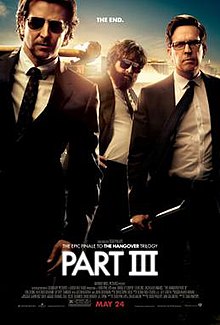
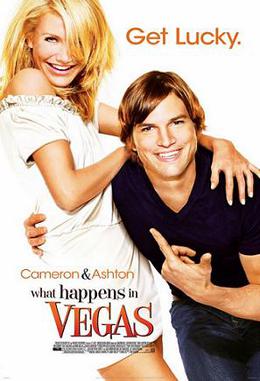
I sat down recently with some friends of mine, and by friends of mine I mean the two ladies on the other side of the pharmacy whose conversation I was listening in on (I don't have any real friends). They were trying to decide which film to go and see that night, and when they came to the movie which this review is about, one woman scoffed at the idea of seeing a "cartoon thing like that". Suddenly, I put down my Oreo Cadbury chocolate bar and tried to imagine the countless hours spent designing the characters, environments, animation styles, and then on top of that, having to actually make a movie with snappy yet realistic dialogue and a story that was worth a damn. Add that to the time spent training actors used to relying on more than just their vocal performance to sell a character, an animated movie is a hell of a lot of work. And yet, there are still those in this world who would rather see 'Think Like a Man Too'. Although I liked the first one, and haven't seen the sequel, movies that are set in Vegas haven't had a very good track record as of late.


These movies range from 19% - 47% on the Tomatometer. 

Of course this conversation only confirmed my long held suspicion that to the general audience, animated movies are one of the most underrated forms of cinema. I can partially understand this, as perhaps they have not been exposed to the better offerings of the genre. Lord knows that for every 'LEGO movie' there are 50 movies like 'Nut Job'. Studios often saturate the market with a plethora of films with hyper active cartoon characters for parents to shove in front of their kids to get them to stop talking for 90 minutes. However, when an animated movie is good, it's not just a fun film, but often an important one for its target audience. Because of the way animated films are indeed targeted towards children, they are used as vessels to tackle a more mature theme underneath the vibrant characters and musical numbers. 'The Lion King' helps to deal with death, responsibility and shame. 'Toy Story' movies help one understand feelings of abandonment and change and the original 'How to Train Your Dragon' makes it easier to deal with the horrible reality of traumatic amputation. Animated movies are horrendously underrated, and are considered in my view to at times be the highest form of cinema. Just not most of the time.

With that in mind, I walked into this movie with admittedly middle of the road expectations. The first film surprisingly proved itself to be a level above the regular supply of child's cinematic cocaine. This was a pure, uncut, premium, animated high. It was a comedy but it wasn't without heart and the shining aspect of the movie was its characterization. 'How to Train Your Dragon 2' relies on this strong characterization in its opening scenes. We're reintroduced into the isle of Berk, which has undergone great transformation since last we saw it. Dragons are no longer the terrors of the night sky but now aid the Vikings in what can only be described as Quidditch but with dragons instead of brooms, which ups the stakes considerably. It's been a whole 5 years since the events of the last film and although change is in the air, some fools just dare to be different. Hiccup seems to be a contrarian at heart as even though he is lauded as the pride of Berk, he still would rather spend his time discovering far off lands on the back of his night fury, Toothless.


To be honest I'm not sure I can blame him.

It's this which makes the beginning of the movie a tad bit worrying. Although the opening sequence signals that the film is a different monster than it's predecessor, the story beats can't help but feel a bit similar. The basic plot outline as its presented here is that Hiccups father, Stoick, played by Leonidas, wants Hiccup, played by the perpetually whiny Jay Baruchel, to become chief of Berk. Hiccup doesn't feel up to the job and would much rather hang out with his pet discovering the world. Compare this to the story of the original, in which Hiccup doesn't want to kill a dragon and would much rather hang out with his pet and learn how to fly, and 'How to Train Your Dragon 2' dangerously feels like it's going down the path of 'Ghostbusters II' or 'The Hangover part II' and telling a story that is simply a rehash of the original.

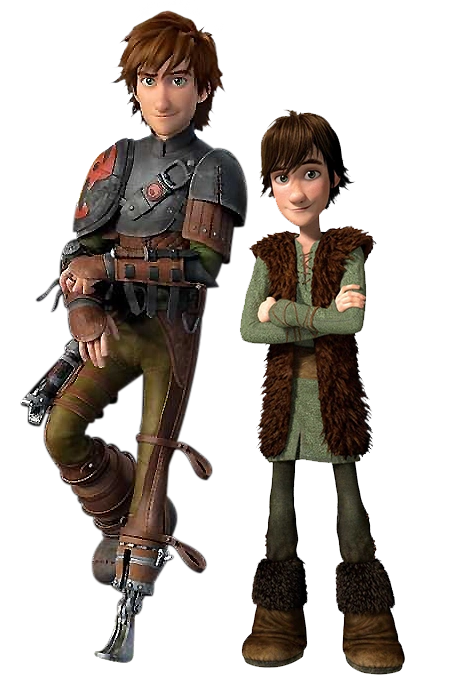
It's not until the very end of the first act, but once all the set up is out if the way, the movie thankfully comes into it's own and doesn't stop from then on. The movie brings along the supporting cast from the last film and they help to make the movie feel like there's always something going on. There's a sub-plot with these characters that doesn't really go anywhere but it's entertaining nonetheless mostly feeling like something that would come out of an episode of an animated kids show. The voice actors from the first film return for this one but this is slightly awkward in the case of Hiccup. Since Hiccup is now 20 instead of 15 it stands to reason that his voice would develop past that of a baby trying to speak while chewing its food. In fact, they even make fun of his lack of development in the film. When you get over that though, Baruchel actually gives quite a performance. You definitely get the sense that this is a character who has grown since you last saw him both in what he says and how he says it. 'How to Train Your Dragon 2' has uniquely created a character that will have grown alongside the audience that fell in love with him the first time.

Growth and development in a children's movie in both character and design.

The key to that growth is Hiccup's continuing search for identity. Everything may seem to be going his way; he has his dad's pride, a cute girlfriend and his relationship with Toothless is even stronger. When his dad asks him to become the new chief, he can't help but think that despite all his development he still has no idea who he is. I thought this was a very poignant storyline. While it does initially seem like a similar foil to the first film, it actually ends up being a refreshing take on how a sequel is done right. Instead of creating a completely new conflict for Hiccup to deal with, the movie services it's character by simply saying that the ideas of the first film were not ones that could be realistically resolved in a 90 minute runtime. This makes 'How to Train Your Dragon 2' feel immensely connected to its predecessor. Where Hiccup might have undergone some great change in the first film, this movie reminds us that growing up is hard and you're never quite finished with it as life will always find some way to challenge you. 

As if that weren't enough, Hiccup has to set aside his young adult identity crisis and deal with a whole other life threatening plot. When traveling on the back of Toothless, Hiccup comes across a conflict that threatens his home and everyone he loves when he comes across Eret, son of Eret (who is played unrecognisably by Jon Snow). Eret is a trapper looking to collect dragons for the evil Drago Bloodvist played by Djimon Hounsou. Drago is the films main villain and to that measure he's great. He certainly walks with a formability that a Viking would have and the movie actually paints him as quite a sympathetic villain even if his plan of rule the world with dragons is a bit played. Coming across Drago also forces Hiccup to be reunited with his long lost mother played by Cate Blanchett. This nicely fuses Hiccup's personal arc with the films plot as running into his mother not only aids in developing his identity but also in his fight against Drago. I found the portrayal of Hiccup's mother quite humorous. I won't spoil the reason for her absence as it plays into the Hiccup's journey, but it basically boils down to the mother who leaves because she feels trapped and wants to find herself on a trek through the wilderness. It works for the movie and ties in with Hiccup's personal journey but there's the feeling that maybe Hiccup forgives this a little too easily. 

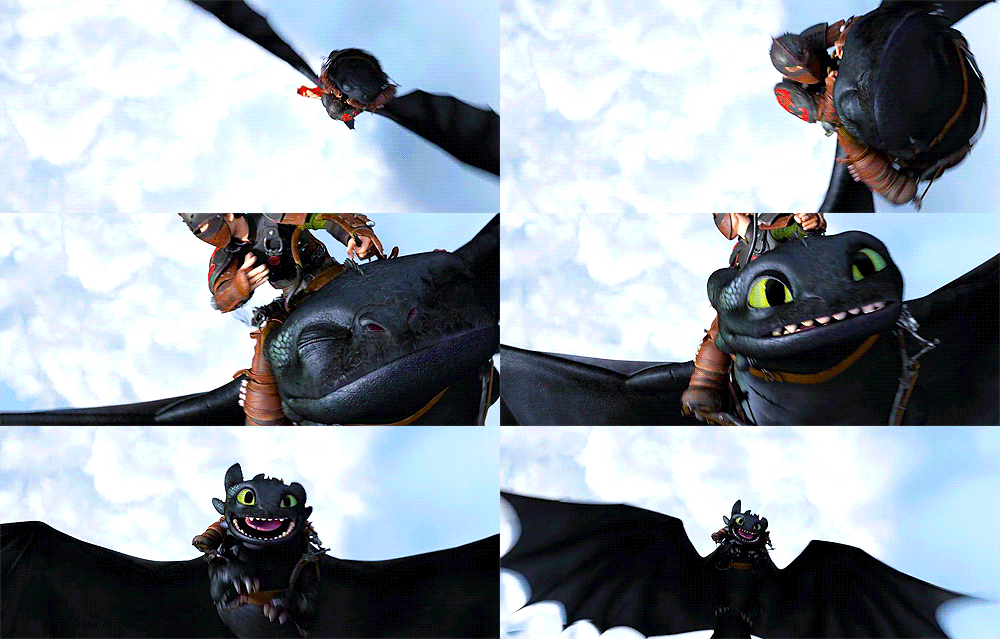
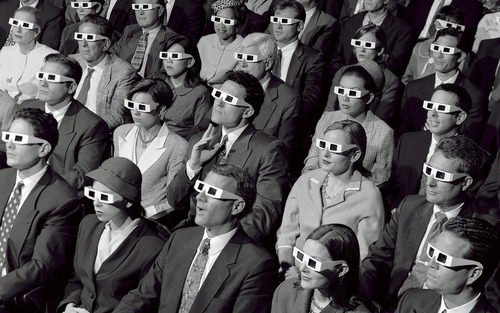
With all these story elements, it's easy to assume that the movie bites off a bit more than it can chew, but it actually pulls it all off at the same time injecting the movie with some top of the line action sequences. You may have forgotten that this movie has dragons in it but damn, does it ever. Each member of the supporting cast has a dragon of their own and each one has a unique aesthetic design and personality. The first film affirmed that dragons are no more than over sized fire breathing pets, with the qualities of both a cat and a dog, and this film goes further with that notion making the beasts as loveable as ever. However, when it comes time to kick ass, asses are indeed kicked. Continuing the tradition of incredible use of 3D in Dreamworks Animated features, this movie is perhaps the only movie this year that I've seen that's deserving of the 3D price tag. You definitely feel the weight of a dragon's wings as you soar through the air at incredible speeds, and be bobbing and weaving in your seat to avoid the arrows shot your way. 


The modern audience is harder to impress than this lot

'How to Train Your Dragon 2' strikes the same notes of it's first film, and that's not necessarily a bad thing. It's not lazy in its storytelling and it doesn't try too hard to reinvent the wheel. It perfectly advances it's story and characters by being a true continuation of its first film. This truly feels like a movie that was born out of an actual idea. It had a place to take its characters and wasn't a platform to sell toys, tickets and promote a television show. The way the film balances it's action, humour and heartfelt moments is beautifully wrapped up in returning composer John Powell. The score here is as fantastic as it was in the first film which added a bonus to the film for me personally because I quite enjoy when a film franchise has a familiar theme throughout it's iterations. All in all this movie was wonderful and definitely worth the price of admission. I'd very much like to see it again.

Arbitrary Numerical Rating: 8.9/10

Saturday, 24 May 2014

'Godzilla' Review (2014)

The creature feature has come a long way in movie history. What once was depicted using a man in a rubber suit and a couple of cardboard boxes with windows on them, has now been revolutionized to truly embrace a scale which warrants the terrifying theme these movies cover. The arrogance of man and the danger of hubris. This is essentially what all science fiction can be boiled down to. A style of story telling that takes dilemmas grounded in reality (science) and exaggerates them through a hyperbolic metaphor (fiction). This is arguably best done today in which we have the means to truly portray that metaphor in a way that can be realistically perceived.

That's not to say that practical effects can't achieve the same level of resonance, surely the fact that David Cronenberg's 'The Fly' still scares the wits out of me is evidence of that. Computer generated imagery can most certainly go awry, depicting something that isn't so much spectacle as it is debacle. Whether the effect is practical or otherwise, the look of the monster doesn't mean anything if the script is drivel. The original 'King Kong' is a much more poignant movie than it's 2005 remake with a photo realistic ape. The way in which a special effect is used determines if a story has any real weight to it or if its just popcorn fodder. When a movie can find that sweet spot between a good effect and a killer story, it's like Christmas in whatever month that movie came out. Except December. Cause that's just Christmas. It just so happens that giant monsters are more likely to feel real through cgi rather than a suit-thing. Speaking of giant monsters, the king of monsters' latest movie opts to crush the damned suit-thing and go the way of the dinosaur. The tech upgrade is a welcome one and marks the first time the beast has ever been depicted using pixels instead of pastels.

Fan art for the 1998 movie that was supposed to happen, but didn't. Capisce?

Kicking off with a montage of newspaper clips and redacted documents that make up the opening credits sequence, 'Godzilla' is a movie that is fully aware of its history and the connection it has with actual history. In fact it's a movie that's also very aware of movies that might've paved the way to this films creation. Numerous references are made to Jurassic Park, Cloverfield and other movies of that ilk. The opening sequence seems to be pulled directly from Jurassic Park, mirroring the scene in which the amber containing the mosquito is discovered. This time instead of a million year old fossil of a mosquito, scientist Dr. Ishiro Serizawa, played by Ken Watanabe, and Vivienne Graham, played by Sally Hawkins, are pointed in the direction of what appears to be a kaiju skeleton which is somehow related to the collapse of a mine in the Phillipines. "Is it him?" Asks Dr. Graham, and suddenly the audience is thrust into the world in which these characters inhabit, where science and fantasy become one.

It's this aspect of the film that probably works best. There's an element of suspense to Godzilla not found in most science fiction films. While most movies struggle to explain the rules of how their universe operates, Godzilla never has to work too hard due to the fact that the audience is largely familiar with the concept because of the franchise's history. That's not to say that there aren't moments chock full of exposition at certain points, but those moments are infrequent and don't bother as much simply because the ideas they present are so interesting and fresh. The best thing I can compare it to is the current 'Hannibal' television show. Both properties benefit from the familiarity audiences have with the titular character, and thrive in showing the way such characters could come to exist.

Somehow I doubt they could fit that on Godzilla

This is most shown through the eyes of Bryan Cranston's Joe Brody, an engineer working at a Japanese power plant which, shortly after the scene involving Dr. Serizawa, is affected by a catastrophic event believed officially to be an earthquake. Flash forward 15 years or so and we see a man still affected by that event. His son, a Lieutenant Ford played by Aaron-Taylor Johnson, thinks him insane due to his obsession and simply wishes for his father to move on and find peace. The movie doesn't dwell on their opposition, quickly coming to a resolve that sets the story in motion, as the audience ultimately wants to follow Joe on his quest for truth. We then follow Joe and his son through the irradiated quarantine that they once called home.

Here is where the movie's most emotional moment lies. As they go through the remains of their old home to collect 15 year old data, they also find a few things they'd assumed long lost. It was as if watching characters go through a time capsule they didn't know they'd made. Bryan Cranston is a joy to watch as always and brings a depth to his character as a man who for years forewent his family for the sake of his work. It's a familiar theme but there is a sense that he's not only lost the chance to play a game or two of catch but also pieces of his sanity over the years making it even more tragic. Aaron-Taylor Johnson is less engaging as the kid who grew up with a distant dad and seems to have come out okay all things considered. I never got the sense that his childhood was of any real consequence to him, making him even less interesting.

The two get caught however, and eventually, there are monsters.

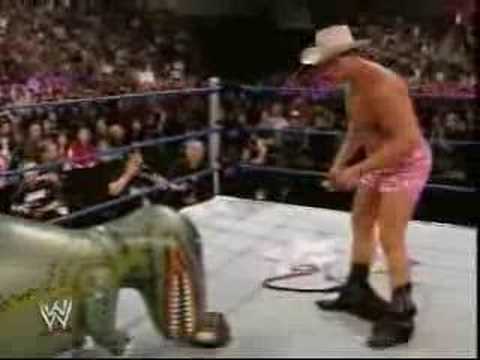
The first scene involving a great beast is a thrilling one. It's a fantastic depiction of a creature that seems to rest on the line between a terrestrial foundation and other-worldliness. The most impressive thing is in how the thing is shot. A mix of wide aerial views along with a few point of view shots from the civilian level, give the creature the space it deserves to elicit awe and the grounding it needs to strike fear. The method is interesting, with both angles attempting to give a sense of scale, and it works. Until it doesn't. The king of monsters emerges from the depths off a Hawaiian coastline, causing a tidal wave in his wake. With a single step the ground seems to shiver until finally, before his opponent, Godzilla lunges forward with a roar so intense, it rivals anything heard before it. And then the film cuts to a few quick cuts of the fight being watched by another character, halfway across the world from the action, on the local news channel. The intention is obvious. It means to establish the world that reacts to these monsters, which is a noble effort. But when your movie is chock full of scientists, military officials, and John Q. Everyman explicitly stating their reactions to the monsters, it's safe to say that a highlight reel of WWE monster smackdown in the corner of the screen isn't appreciated. You just feel cheated.

This would've been more engaging. http://www.youtube.com/watch?v=zI8hWJ1zbxs

This happens more than once. Monsters are about to throw down hard and the film moves to one of its many characters who are nowhere near the current setting. It's not to say that they don't show the monsters, because they do, it's just that whenever there happens to be a scene in which there is tension, excitement and genuine fear for a characters' safety, the film suddenly negates that tension by leaving the scene in the middle of it. You suddenly feel like nothing matters in this world and the characters you're fearing for are all going to be fine. Simply because you doubt the film would bring about their demise off screen.

It's a strange thing for a movie to do especially when so much emphasis is placed in their character's interactions. After the initial scene where the monster is revealed, the plot then focuses on two basic stories. The first is damage control. Finding a way to minimize death and destruction for the larger population. The second, is centred around Ford's mission to return to his family back in San Francisco. Luckily, Ford is not just a family man, but a soldier with a sense of duty, making it easier for the movie to juggle the two stories without feeling as if one overshadows the other. While they do find a good balance between the two, the first is more engaging simply because of the implications it has on the world at large, and maybe because we see so little of Ford with his family to care. At the beginning of the movie he's a bomb specialist just returned from a tour overseas and just before we can get any real investment into these people, the movie kindly asks him to leave. There are a few scenes which are very touching, but they're so few and so distanced that the overall effect is frankly very little.

The military on the other hand has an interesting and at times morally ambiguous dynamic. The sergeants and generals thankfully don't suffer from the elective ignorance that plagues their kind in most sci-fi, and are more than willing to listen to the advice of Dr. Serizawa, being the renowned expert in all things Godzilla. There is a tendency to say that perhaps the military is handling the reveal of gargantuan creatures a bit too smoothly, especially when the expert is constantly jaw dropped, but this only serves to up the stakes. The military is so calm and collected it speaks to the idea that the damage that these creatures could do is so great that they really don't have time to do anything other than what's necessary. Unfortunately what's necessary is somewhat ridiculous. The overall plan to deal with the creatures strikes a tad bit silly in its execution but the supposed ideas behind it are so compelling that it's easy to give this a pass.

In any case, characterization usually is the saving grace for a silly plot, so it's a little grating that 'Godzilla' has very little to speak of. The overall effect of the situation at hand is felt through both the general population and the military but the main characters in the film just seem like one of those larger subsets. Lt. Ford is just another soldier, albeit one with the particular skills needed in the final act, and his family is just another family. At the end of the movie they don't feel any more present to you than any of the characters in the background.
Dr. Serizawa is probably the only other character to speak of in the movie but it's hard to invest in his character when you're given so little about him. The little bits they do give about these characters come off as half-assed attempts instead of definitive declarations of who these people are. The only character that you want to spend time watching is Godzilla, and the movie doesn't give you much time with him. While this is to the movies benefit as it not only serves to make his scenes more effective, it just makes the scenes without him unnecessarily frustrating.

It's like this except with a pinch more bland.

When the movie does show you Godzilla however, they sure as hell show you Godzilla. The scene I described of Godzilla's introduction is indeed a powerful one, but the finale is appropriately mesmerizing. There is real tension in these scenes but the movie definitely delves into the real meat of it's titular monster. The downside to these scenes is that they are frustratingly dark, with Godzilla fading into the shadows of fallen buildings. The very final moment of the climax isn't as powerful as what came before it but the movie achieves a spectacle worthy of its tumultuous set up.

Overall I can say that Godzilla is a movie worth seeing if not only for its finale. While I appreciated the ideas of its main story, the haphazard way in which they were brought forward combined with a significant lack of character, makes it hard to imagine most people feeling the same, given how long the movie ends up feeling. With a couple pacing problems in the tenser scenes of the movie, 'Godzilla' can sometimes feel like it exists solely to frustrate but with such a fantastic payoff, it's easy to forgive it.

Abritrary numerical rating: 7/10


Sunday, 20 April 2014

'Captain America: The Winter Soldier' (2014) Review

Almost a decade ago, Christopher Nolan and David S. Goyer did what many thought to be impossible. Batman, a character rooted in Gothic sensibilities, had his best film outings include a man with literal flippers and a beak who called himself the penguin and a Christopher Walken playing the bride of Frankenstein. Nolan and Goyer took those Gothic sensibilities and used them to reinvent the caped crusader and in turn revolutionized the comic book genre, sometimes for the worse. Soon after that Spider-Man donned the black suit, and superheroes stories would continue to explore the darker, angst ridden train that 'Batman Begins' set them on.

Of course that train did end up taking a nose dive...

And why wouldn't it? The Dark Knight was one of the first films in the superhero genre to make over a billion dollars at the box office. Aside from that it gained the sort of legitimacy most films can only dream of when it scored the academy award for Heath Ledger's Joker. Surely both financially and artistically it only made sense that if these movies were to evolve past the days of Bat nipples and Shrek hulk, a darker direction was essential. That's why Spider-Man has more gloom than ever and Superman is a stone cold space killer.

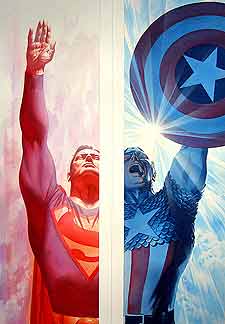
I repeat. Superman is a stone cold space killer. That's a problem.

As I mentioned in my Man of Steel review, the final scenes of the film feel disconnected from the character of Superman. This isn't just the character as he exists in popular culture but in how the film itself presents him. Superman is supposed to be an ideal to strive towards, the ultimate messianic metaphor in tights, someone who upholds the values humans hold dear while maintaining the power of a god. To balance this type of boy scout character against a brooding backdrop can be trying as it either leaves the world you've established feeling unrealistic with black and white morality in which the hero doesn't have to make any hard choices, or the hero himself feels unrelatably naive. Pushing superhero movies towards a darker tone in an effort to mature the genre and the stories told within it is an admirable achievement when done right, but it can only be done right through an appreciation of the character itself. It's easy to make Batman dark because that's where he shines brightest, but characters like Superman, and Captain America for that matter, are better off standing in the sun.

Not everyone can be Batman. Not everyone should be Batman.

So with all that said, how does the latest in the genre, 'Captain America: The Winter Soldier' (CA:TWS) fare in this ongoing battle to achieve a balance of relatable realism? Well in my view, it does it better than any other before it. Picking up the pieces after the "Battle of New York" in 'The Avengers', CA:TWS, follows the star spangled man with a plan as he makes his adjustments to 21st century living. Right off the bat we're privy to this as Chris Evans' Steve Rogers makes a mockery out of Anthony Mackie's Sam Wilson in a morning jog that ends with the two sharing a meaningful conversation that will help shape their friendship throughout the film.

Anthony Mackie plays Sam Wilson, a retired Afghan vet who spends his days volunteering at a support group for veterans struggling to acclimate with their return from the horrors of war. Naturally Steve Rogers finds a friend in him as although the two have slightly different situations, Steve's war was more than half a century ago while Sam's was less than a decade, they still manage to relate to one another. After all, "War. War never changes."

Anything Perlman says is law.

After Wilson adds to Captain America's ever expanding list of things he just has to read/watch/listen that he missed with 'Trouble Man' by Marvin Gaye, an album he claims to compile everything from the last 70 years into one album, 'CA:TWS' takes the training wheels off and begins in one of the best opening sequences in a superhero film to date. Captain America, following returning femme fatale Black Widow, is now a full fledged agent of S.H.I.E.L.D, as part of his attempt to embrace the familiarity of following orders and serving his country. Steve inevitably comes to the realization that the ruthlessness and disregard for the privacy of everyday people in an effort to ensure freedom, doesn't really work for the man who just doesn't like bullies, no matter where they come from.

It's here where the movie really hits it's stride and solves the problem I spoke about before. 'CA:TWS' takes the goodness in it's main character and makes it into a redeeming quality rather than a hindrance. In a world where it's impossible to find anyone to trust, Captain America's absolute honesty is a rare and appreciated characteristic. It not only establishes him as a hero, but as a shining beacon for the films darker characters.

This should be a ridiculous character, but somehow it's not

This is where the rest of the cast falls in. Anthony Mackie's character more or less serves as an echo for Cap's good old boy sensibilities, which isn't inherently a bad thing. He provides a valuable support system for Steve in this trying time in his life. The contrast comes from Johansson's Black Widow and Sam Jackson's Nick Fury. As Nick Fury says in the film, Black Widow is comfortable with everything. She and Fury represent a by-product of the world they live in, placing their trust in few. They base their actions on the idea that they take the world as it is and not as they would like it to be. Captain America struggles with this as a man who comes from a time when things weren't so veiled in shades of grey. As the movie is completely in favour of Captain America's straight edge way of thinking, it also shows the merit in a liar's mentality. Providing pitfalls in both Cap and Black Widow's ways of doing things paves the way for the characters to develop over the course of the film. Remarkably so, considering the film takes place in about the span of a week.

When the movie isn't pitting the ways of the past and the present against each other, it's making sweet love to your eyes with a barrage of fantastically choreographed fight scenes. Many people wonder how Captain America can fare against more fantastically inclined supers like Thor and Iron Man, but Captain America holds his own in this movie. The fights are closely shot but it's finally done in a way that convey's chaos instead of confusing it's viewer, which is a rarity in action movies nowadays in an attempt to procure a PG-13 rating. The punches are not pulled and it perfectly conveys the confidence that Captain America oozes as the greatest soldier in history. Close combat fight scenes provide a good amount of tension, but the film also brings that with a few tense chase scenes, either involving Nick Fury's smart car or on the rooftops of Washington. As the action scenes are as tense as the tone of the film is dramatic, there is a good balance of comedy within the film so that you get a chance to breath. Whereas Thor: The Dark World suffered from an inability to hold back the funny, 'CA:TWS' understands the value in pacing. The dread felt in one moment is not cheapened by the levity of the next.

Ah Whedon.

Speaking of tension and dread, the main villain in the movie is a force of horrifying nature. As Steve delves deeper into the secrets that shackle the world he lives in he encounters the second titular character the Winter Soldier. Completely clad in his own personal arsenal of what I can only assume is an endless supply of knives, grenades and handguns, the Winter Soldier is a slow walking silent death. From the characters first scene in which he enacts his cruelty with surgical precision, the masked menace with a metal arm chews a stick of mint gum, grabs your spine and blows a gentle chill down it. More often than not, with a character like this, his formidable nature is merely told to the audience but he never actually does anything. Such is not the case with the Winter Soldier. The character does more than enough to convince you that he is to be feared, leaving you just enough to leave to your paranoid imagination.

Chris Evans once again takes a character who, if not done right, could be cornier than Orville Redenbacher's namesake. Instead he's played in a way that throws away all your cynicism and makes you believe in his good. Johansson has played Natasha Romanoff 3 times now and has only gotten better as time went on. She crafts a widow who is undoubtedly capable with a style that doesn't seem attempted but just happens naturally. Sam Jackson is as Sam Jackson as ever but somehow that isn't a bad thing. Anthony Mackie serves his role as an understanding and charismatic sidekick and makes the most out of what he's given which while great, simply isn't much. Robert Redford, the most surprising casting choice is genuinely an intimidating force as Secretary Alexander Pierce. Most times I've found with superhero movies, there always seems to be at least one actor who doesn't seem fully committed to the role due to the genre of movie it's in and then the film suffers because whenever that actor is on screen the immersion factor is gone. This has gotten better in recent years but still, every now and then you get someone who does the movie just so their kids can see it but doesn't really do much acting wise.

Bleh.

To close out I'll say 'CA:TWS' is an excellently crafted movie with a strong understanding of it's main character, what he represents and how to translate that in a way that is relevant to today. The film presents it's darker tones and balances it with appropriate humour and the action is unspeakably good. If there is anything bad to be said about the film it would only be the fact that Captain America's shield is apparently capable of breaking the laws of physics in the way it bounces off of things and returns to Cap but once you just accept that then you should be just fine.


A.N.R = 9.7/10

P.S This movie is already the best superhero movie of all time, for the simple fact that it makes use of Captain America's pouches in a very crucial scene. I can't count how many characters in comics and in the films themselves are covered in pockets and pouches that are seemingly just for show. Aside from Batman and his utility belt, every other hero with a pocket covered belt can't seem to find any use for them other than to make a fashion statement. Must be a union thing.

Pouches. Usually useless.